
Diagnostics
To find the reason for illness, diagnostics are done after the general exam of the animal.
Some of the diagnostics are done in-house others have to be conducted by external laboratories or your animal needs to be seen by another veterinary specialist.
Below you can find short explanations of diagnostic tests I offer.
Laboratory Services
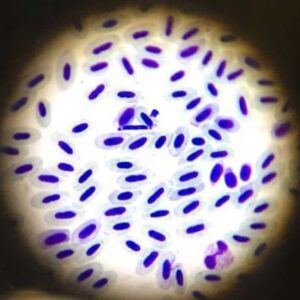
Blood work
Some diagnostics can be done by machines. However due to the fact that avian and reptilian blood cells are nucleated, a complete blood count (CBC) can’t be done by a machine. Instead a blood smear needs to be examined under the microscope and cells are counted manually.
Blood biochemistry is performed by a machine and results interpreted in the light of clinical signs.
To rule out heavy metal intoxication in birds, blood zinc and copper levels can be measured, this is performed by an external laboratory.
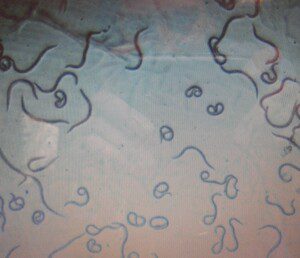
Fecal exam
A complete fecal exam for birds and reptiles include:
1) direct smear – to detect motile protozoae;
2) flotation – to detect oocysts of gastrointestinal parasites;
3) in case of birds it also includes a fecal gram stain.
A fecal exam can be performed either on a sample collected by the owner from the cage or terrarium (the sample should be slightly wet) or collected by the veterinarian through cloacal swab (birds) or cloacal flush (reptiles).
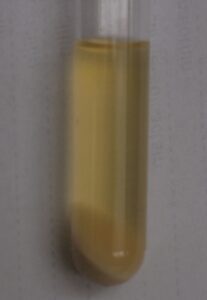
Urine analysis
Urine analysis in exotic mammals is very similar to that of cats and dogs. Commonly a test strip is used. The specific gravity can be determined with a refractometer. Further test may include: Measuring urine glucose level, microscopically examination for crystals, staining for cytology and/or culture and sensitivity.
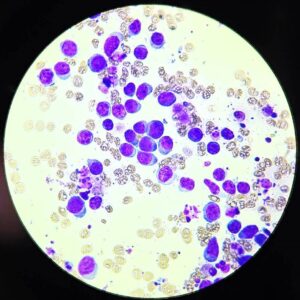
Cytology
Cytology means that a dried smear is stained and examined microscopically. Cytology can be performed on many types of samples, incl. from fluids obtained by thoraco- or abdomincentesis. Cytology is also performed on Fine needle aspirations (FNA) of masses.
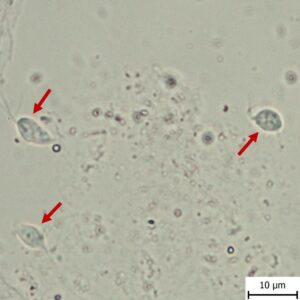
Crop swap
A crop swap is done to detect the motile protozoa Trichomonas spp. A parasite that is common in Budgerigars and causes progressive debilitating disease.
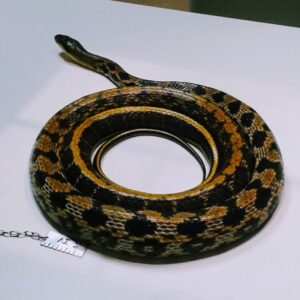
Bronchotracheal lavage
In case of suspected pneumonia in snakes a broncho-tracheal lavage is performed and the aspirated fluid is examined under the microscope to check for:
1) parasites;
2) inflammatory cells;
3) fungal or bacterial elements.
A separate sample is taken for microbiology.
Imaging Diagnostics
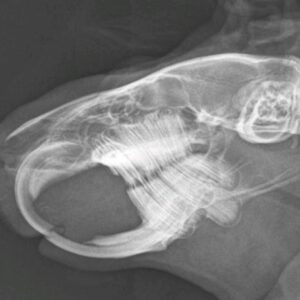
Digital Radiology
Radiography is a fast way of assessing the whole body of most exotic animals. It’s essential diagnostic tool for rabbit and rodent dentistry.
Most animals will not need to be sedated for taking radiographs. However birds will need to be anesthetized for this procedure.
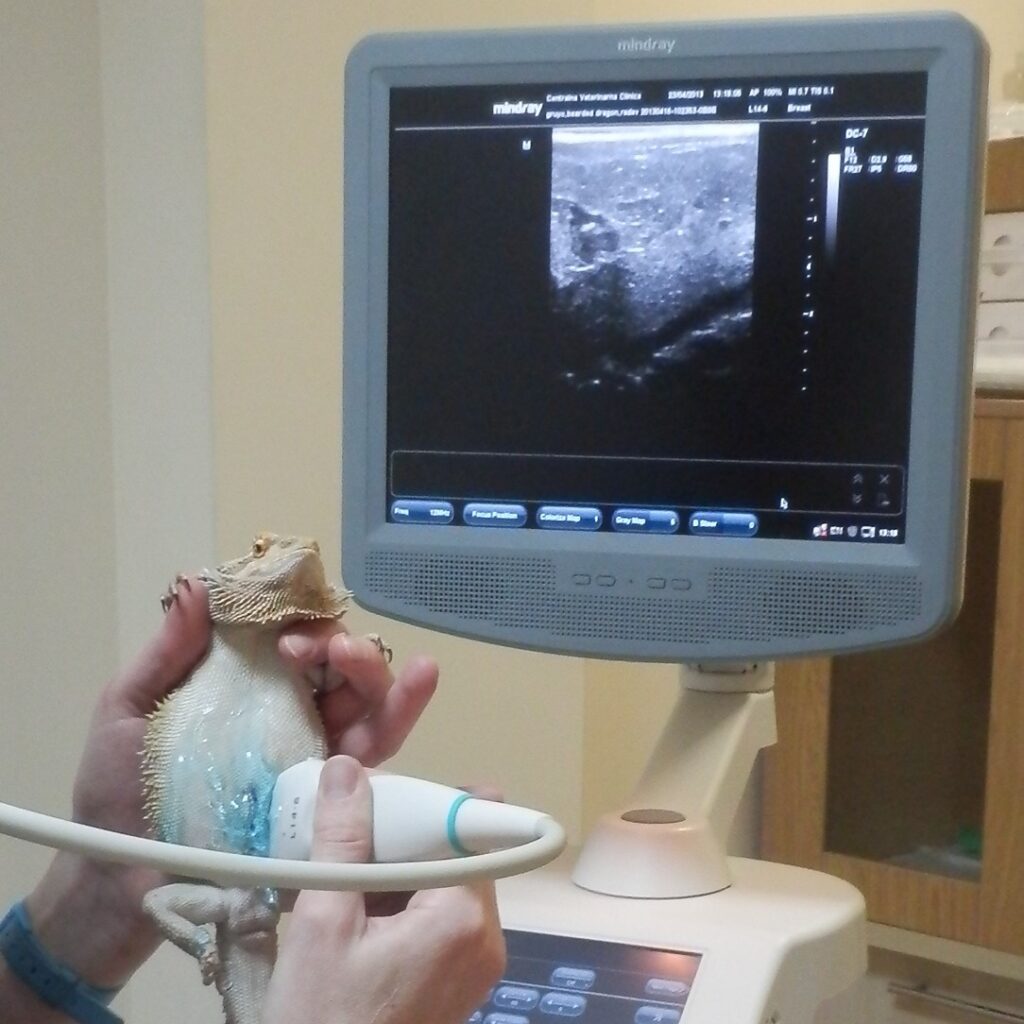
Ultrasonography
Ultrasonography can be performed on almost all exotics. This imaging technique is done on wake non-sedated animals.
Cardiac ultrasound is performed by a veterinary cardiologist, to which you will be referred if deemed necessary.
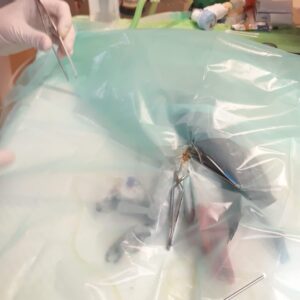
Endoscopy
It’s commonly used in birds to assess the coelomic cavity or to retrieve foreign bodies from the gastrointestinal tract.
In mammals endoscopy is used to asses the ear canals, nasal cavities and parts of the gastrointestinal tract.
All animal need to be anesthetized for this procedure.
If deemed necessary you’re animal will be referred to a colleague for endoscopy.
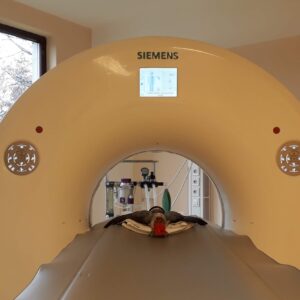
CT-scan & MRI
CT-scan is commonly used in rabbits to asses the structures of the skull, in case of dental or middle ear disease. Some rabbits need to be sedated, whereas other can be fully awake. It’s a short, painless procedure, but the animal needs to be motionless.
MRI is used to asses soft tissue of the skull in rabbits. The use in smaller animals is very limited since their size doesn’t allow accurate image interpretation. MRI takes at least 15 min. in which the animal needs to be motionless, and thus needs to fully anesthetized for this procedure.
If deemed necessary you’re animal will be referred for either CT-scan or MRI.
Contact Me

Call me


Send me a Message
